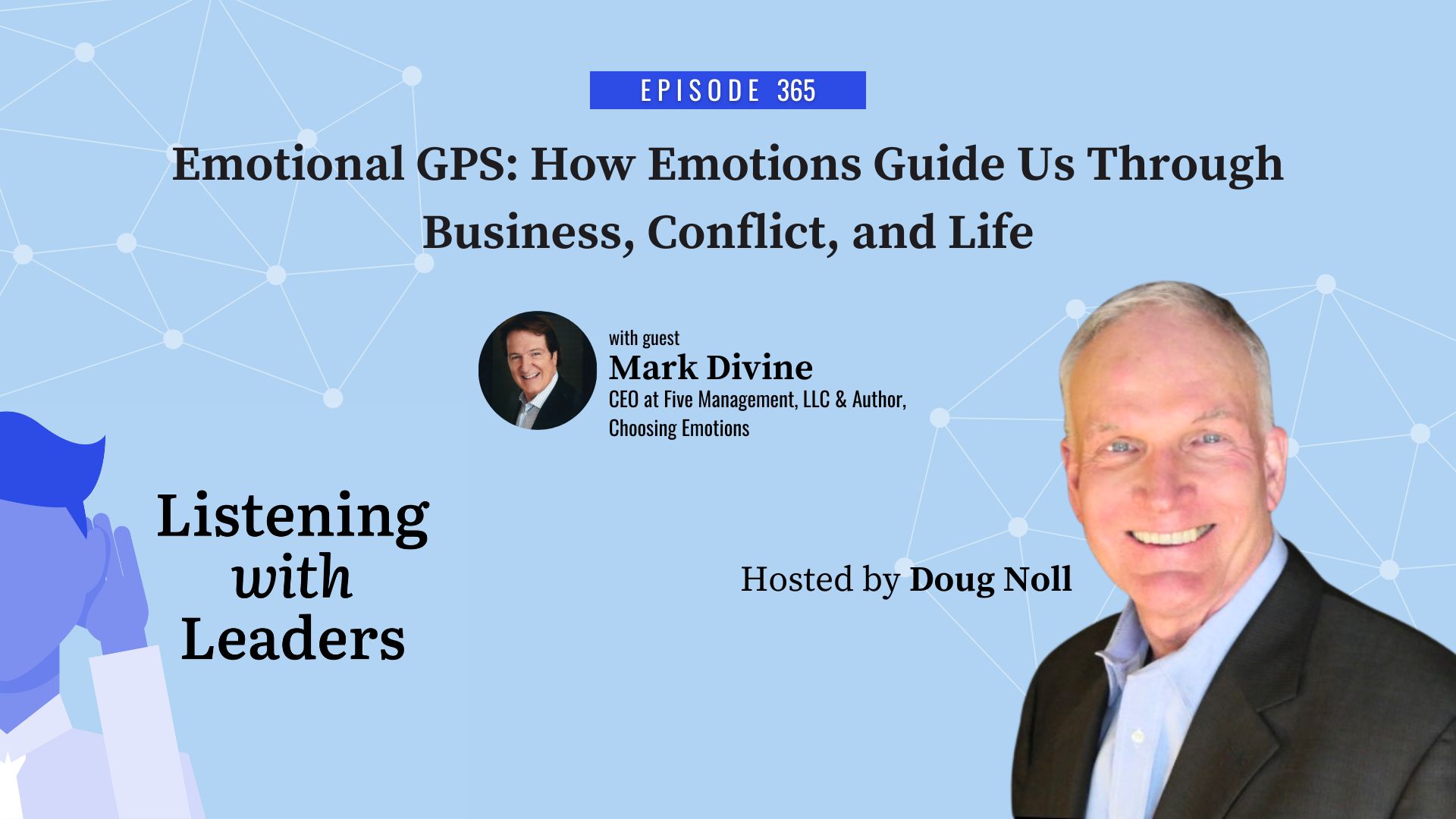
365 - Emotional GPS: How Emotions Guide Us Through Business, Conflict, and Life
Beyond Logic: Mastering the Emotional Operating System of Leadership
In this episode of Scaling Smarter: Listening with Leaders Podcast, host Doug Noll sits down with Doug Johnston, CEO and author of Choosing Emotions, to dismantle the long-standing myth that emotions have no place in the boardroom. Drawing from a decade of deep research inspired by a personal family crisis, Doug Johnston challenges the Western stigma that labels emotions as irrational or weak. Instead, he reveals that emotions are actually a sophisticated navigational system essential for sound decision-making and high-performance leadership. This conversation offers a profound shift in perspective, moving from a model of emotional suppression to one of emotional mastery, providing listeners with a roadmap for harnessing the power of the "human operating system" to drive professional excellence and personal flourishing.
Leading the Nervous System: The Science of Emotional Literacy
The traditional leadership model emphasizes logic and "rational choice," yet neuroscience proves that rational decisions are impossible without emotional input. Doug Johnston highlights that a leader is not just managing a team’s output, but rather managing their nervous systems; a dysregulated leader can unintentionally spread stress and instability throughout an entire organization. To counteract this "emotional contagion," a CEO must act as the Chief Emotions Officer, first regulating their own nervous system before attempting to guide others. By treating emotions as vital data points rather than distractions, executives can address the unspoken undercurrents in meetings and foster a culture of psychological safety where teams are empowered to innovate rather than shut down in fear.
A significant barrier to this mastery is emotional illiteracy, or alexithymia, where individuals struggle to name what they are feeling beyond basic categories like "happy" or "angry." Research from UCLA shows that the simple act of naming an emotion—a practice known as "affect labeling"—actually de-escalates the brain's distress centers and reactivates the regions responsible for self-regulation. Doug Johnston’s work documents an incredible 272 distinct emotions, providing a linguistic "portal to meaning" that allows leaders to pinpoint precisely what is happening within themselves and their teams. Expanding this vocabulary transforms the vague experience of being "upset" into actionable clarity, allowing for more precise communication and more effective conflict resolution.
Effective leadership requires a courageous departure from cultural scripts that teach us to "stuff emotions in the trunk." Suppression does not eliminate feelings; it merely causes them to resurface as chronic stress, toxic conflict, or burnout. By adopting a "nervous system leadership" framework, founders and executives can create a space where emotional expression is validated rather than judged. This mastery is not a fixed trait but a skill that can be learned and refined, much like financial literacy or strategic planning. When a leader leans into the vulnerability of emotional work, they don't just become more "empathetic"—they become more effective, building organizations that are resilient, unified, and deeply human.
About Doug Johnston
Doug Johnston is a veteran corporate executive, the CEO of Five Management, and a dedicated emotional researcher. His quest to support his daughter through a battle with depression led him to spend over ten years studying the intricacies of the human heart and mind. He is the author of a comprehensive reference work on emotions, aimed at providing a common language for human experience and helping people navigate their inner lives with greater precision and peace.
About Choosing Emotions
Choosing Emotions is a platform and resource center founded by Doug Johnston to promote emotional literacy and well-being. By offering deep insights into the science and experience of 272 different emotions, the organization helps individuals and leaders move from emotional confusion to emotional clarity. Through his writing and consulting, Doug Johnston provides the tools necessary to dismantle personal and cultural barriers to emotional health, fostering more connected and effective lives.
Links Mentioned in This Episode
Key Episode Highlights
Emotions as a Navigational System: Recognizing that the primary function of emotions is to protect and guide us, acting as the foundation for all human reason.
The "Name It to Tame It" Rule: Using specific language to label emotions (affect labeling) to calm the brain's threat response and reactivate rational thinking.
Nervous System Leadership: The framework of regulating your own internal state first so that you can effectively regulate the emotional climate of your team.
The Cost of Suppression: Understanding that invalidated or hidden emotions eventually resurface as organizational friction, stress-related health issues, or violence.
Building Emotional Granularity: The importance of expanding your vocabulary beyond basic feelings to gain more power over your inner world and interpersonal dynamics.
Conclusion
The conversation with Doug Johnston serves as a powerful reminder that emotions are not the enemy of logic, but its very foundation. By reclaiming the ability to name and process feelings, leaders can unlock a higher level of intelligence and connection within their organizations. Mastering the "Chief Emotions Officer" role is a continuous journey that starts with a single, courageous step: acknowledging that being emotional is not a liability, but the very essence of effective leadership.
Are you ready to explore how emotional intelligence and active listening can transform your executive leadership? I invite you to explore DougNoll.com to learn more about my specialized leadership coaching and conflict resolution methodologies.
Are you a visionary leader with a story of growth and cultural transformation to share? We are looking for insightful guests to join the conversation. Apply to be a guest on the Scaling Smarter: Listening with Leaders Podcast here.


